

Resilience and Mental Health : It’s More Than “Being Strong”
We often admire people who seem resilient. But resilience isn’t about pretending life doesn’t hurt.
Most of us know someone who has faced tremendous challenges and somehow found a way to move forward. We describe those people as resilient.
It’s easy to assume resilience is something you are simply born with—that some people are naturally stronger, tougher, or better equipped to handle adversity.
The truth is much more encouraging: resilience is a skill that can be developed.
It can grow through life experiences, healthy coping habits, supportive relationships, self-awareness, and professional guidance when needed. Developing resilience can also play an important role in protecting and supporting mental health and emotional well-being.
What Is Resilience?
Resilience is the ability to adapt to difficult circumstances, recover from challenges, and continue moving forward while taking care of your emotional and mental well-being.
Life will always include stress. There may be disappointments, unexpected changes, illness, financial pressures, relationship challenges, and periods of uncertainty.
Wellness does not mean avoiding difficult experiences. It means developing healthy ways to move through them without losing yourself along the way.
Many people misunderstand what resilience means. Some believe resilience means:
- Never crying
- Never asking for help
- Always staying positive
- Always pushing through
- Handling everything alone
In reality, these behaviors can sometimes indicate that someone is carrying more than they should have to carry alone.
Resilience Is Emotional Flexibility
Resilience is not emotional perfection. It is emotional flexibility.
It means allowing yourself to experience difficult emotions without assuming they will last forever. It also means recognizing what you need and responding to those needs in healthy ways.
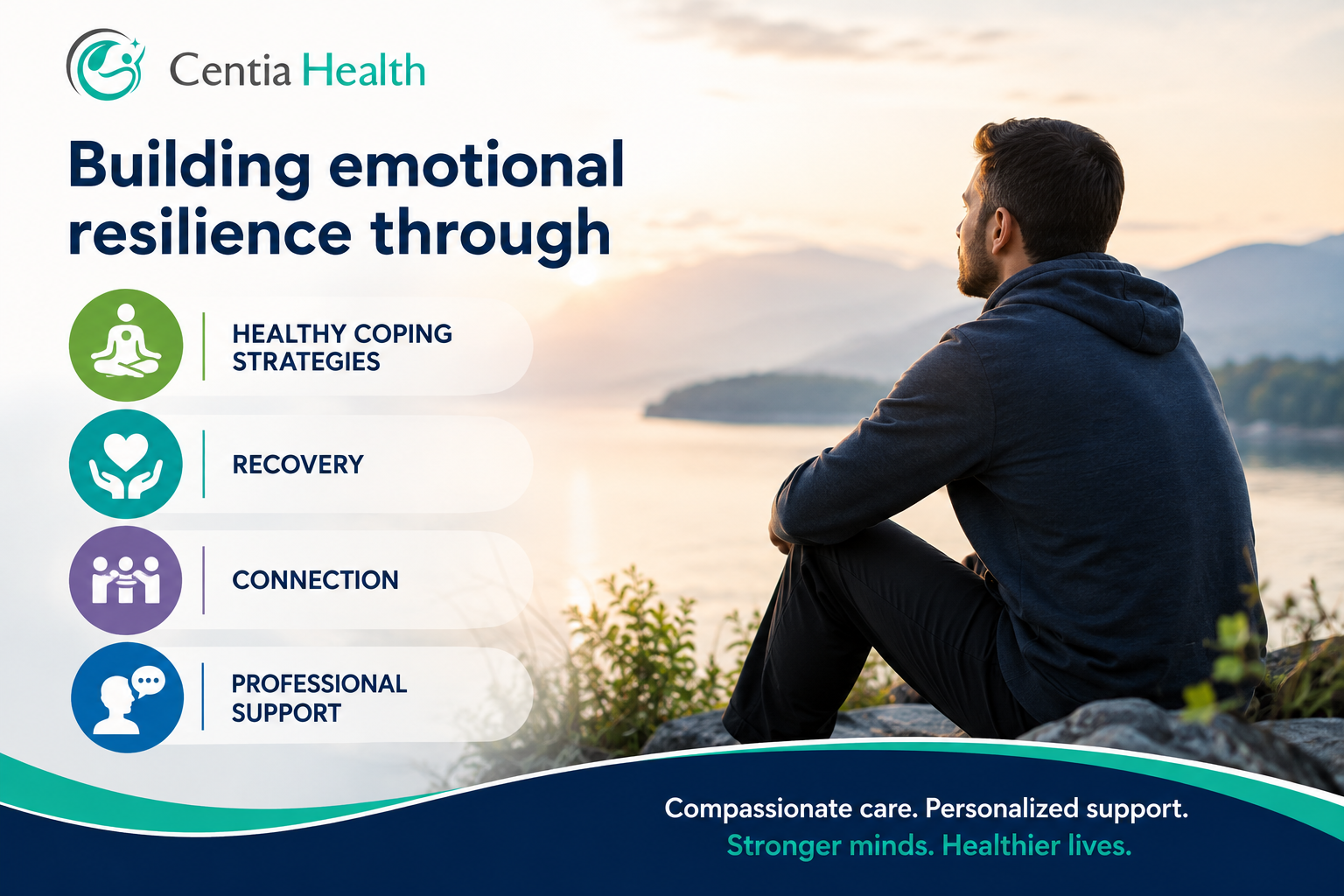
Building emotional resilience can involve:
- Adapting when life does not go according to plan
- Recognizing when you need rest instead of pushing harder
- Developing healthy coping strategies
- Asking for help before exhaustion turns into burnout
- Accepting difficult emotions without judging yourself
- Maintaining supportive relationships during challenging periods
How Resilience Supports Mental Health?
One reason resilience matters is that stress itself is not always the problem.
Our brains and bodies are designed to respond to challenges. Short periods of stress can occur during everyday situations such as preparing for an important presentation, learning a new skill, or navigating a major life change.
The concern arises when stress becomes persistent and there is little opportunity for recovery.
When your mind and body remain in a prolonged state of alertness, it can become harder to sleep, think clearly, regulate emotions, and enjoy everyday activities.
This is why recovery is just as important as resilience.
After a difficult day, consider asking yourself:
- Did I give myself an opportunity to recover?
- Did I make time for activities that help me feel grounded?
- Do I have people I can speak honestly with?
- Am I allowing myself to rest without feeling guilty?
- Am I recognizing when I need additional support?
These questions matter because resilience is strengthened not only during difficult moments, but also during periods of rest, recovery, and connection.
Healthy Stress vs. Chronic Stress
Not all stress is harmful.
Preparing for a presentation, learning something new, taking on a challenging project, or supporting a loved one during a difficult period can create temporary stress. With adequate recovery, people can often adapt to these experiences.
What Is Chronic Stress?
Chronic stress is different because it persists over time.
Instead of recovering after a challenge passes, your body may continue responding as though you are facing an ongoing emergency.
Persistent stress can affect areas such as:
- Sleep
- Mood
- Concentration
- Memory
- Emotional regulation
- Blood pressure
- Overall well-being
Part of building resilience is learning to recognize when stress has shifted from a temporary challenge to an ongoing concern.
If stress begins interfering with your sleep, relationships, work, or ability to function day to day, consider speaking with a qualified healthcare or mental health professional.
Resilience Does Not Mean Never Struggling
Another common misconception is that resilient people never experience mental health challenges.
That simply isn’t true.
A person can be resilient and still experience anxiety, depression, trauma, or significant emotional distress. They may also benefit from therapy, medication, or other forms of professional support.
Seeking treatment does not mean you have failed to be resilient.
In many situations, asking for help can be one of the most resilient decisions a person can make.
As a psychiatrist, I often remind patients that strength and vulnerability are not opposites. Being able to say, “I’m not okay, and I’d like some help,” can require tremendous courage.
Resilience is not measured by how long you can carry everything by yourself. It is reflected in your ability to keep moving forward while accepting appropriate support when you need it.
Connection Is a Powerful Part of Resilience
People sometimes think resilience is something they have to build alone. However, supportive relationships can play an important role in helping people navigate difficult experiences.
Sometimes resilience means encouraging someone else.
Sometimes it means allowing another person to encourage you.
You do not need dozens of close relationships. Even one trusted and supportive relationship can make a meaningful difference.
Connection can remind us that we do not have to carry life’s challenges alone.
Support can come from:
- A trusted friend
- A family member
- A partner
- A mentor
- A community
- A therapist
- A psychiatrist or other qualified healthcare professional
Healthy relationships can provide encouragement, perspective, emotional support, and a reminder that difficult seasons do not have to be faced in isolation.
How to Build Resilience in Everyday Life?
Resilience is developed over time rather than overnight. Small, consistent habits can help strengthen your ability to respond to challenges.
Consider focusing on the following areas:
1. Recognize Your Emotions
Instead of ignoring difficult emotions, acknowledge them. Understanding what you are feeling can help you determine what you need.
2. Prioritize Recovery
Rest is not a sign of weakness. Give yourself opportunities to recover after periods of stress and recognize when your body and mind need a break.
3. Maintain Supportive Relationships
Stay connected with people you trust. You do not have to handle every challenge independently.
4. Practice Healthy Coping Strategies
Identify activities that help you manage stress in healthy ways, such as exercise, meaningful hobbies, relaxation techniques, time outdoors, or conversations with supportive people.
5. Know When to Ask for Help
You do not have to wait until you reach a breaking point before seeking professional support.
6. Be Patient With Yourself
Resilience does not mean recovering immediately. Difficult experiences can take time to process, and progress may not always happen in a straight line.
Frequently Asked Questions About Resilience and Mental Health
Can resilience be learned?
Yes. Although personality, environment, and life experiences can influence resilience, resilience can be strengthened through healthy coping skills, self-awareness, supportive relationships, recovery, and professional support when appropriate.
Is it normal to feel overwhelmed?
Yes. Everyone experiences periods that feel heavier than others. Feeling overwhelmed does not mean you are weak. It may be a signal that you need additional rest, support, or professional guidance.
What is the difference between resilience and “toughing it out”?
“Toughing it out” can mean ignoring your needs and continuing despite emotional or physical exhaustion. Resilience involves recognizing your needs and responding to them in healthy and sustainable ways.
Can therapy help build resilience?
Yes. Therapy can help people develop healthier coping strategies, improve emotional regulation, understand patterns of thinking and behavior, strengthen relationships, and develop skills for navigating future challenges.
When should I seek professional help?
Consider reaching out to a qualified mental health professional if ongoing stress, anxiety, emotional difficulties, or other concerns begin interfering with your sleep, work, relationships, or daily functioning.
You do not have to wait until you feel completely overwhelmed before asking for help.
A Simple Resilience Reflection Exercise
Take a moment to think about the past year.
What is one challenge you have made it through that once felt impossible?
Now ask yourself:
What helped me get through that difficult period?
Perhaps it was your own determination. Maybe it was a supportive friend, family member, faith, professional guidance, time, or a combination of several things.
Understanding what helped you through previous challenges can reveal strengths and resources you can continue using in the future.
It can also help you recognize where additional support could make future challenges feel more manageable.
Final Thoughts: Resilience Is More Than Being Strong
Resilience is not about pretending life is easy or carrying every burden by yourself.
It is about learning to adapt, recover, recognize your needs, and continue moving forward while accepting support when you need it.
If you have been feeling stretched beyond your limits or finding it difficult to recover from life’s challenges, remember that you do not have to navigate those seasons alone.
If you believe professional support could help, consider reaching out to Centia Health to discuss your concerns and explore appropriate support.
Centia Health
Website: centiahealth.com
Phone: (610) 400-4885